“Goodbye little yellow bird.” #FOUR
FOLLOW UP FROM PREVIOUS CHAPTER…..
As soon as it was over, I rushed behind the scenes into the greenroom. The girl was standing there alone, with a look of triumph on her face. Her eyes were lit with an exquisite fire. There was a radiance about her. Her parted lips were smiling over some secret of their own.
When I entered, she looked at me, and an expression of infinite joy came over her. “How badly I acted to-night, Dorian!” she cried.
“Horribly!” I answered, gazing at her in amazement. “Horribly! It was dreadful. Are you ill? You have no idea what it was. You have no idea what I suffered.”
She smiled. “Dor-ian,” she answered, lingering over my name with long-drawn music in her voice, as though it were sweeter than honey to the red petals of her mouth. “Dor-ian, you should have understood. But you understand now, don’t you?”
“Understand what?” I asked, angrily.
“Why I was so bad tonight. Why I shall always be bad. Why I shall never act well again.”
I shrugged my shoulders. “You are ill, I suppose. When you are ill you shouldn’t act. You make yourself ridiculous. My friends were bored. I was bored.”
She seemed not to listen to me. She was transfigured with joy. An ecstasy of happiness dominated her.
“Dorian, Dorian,” she cried, “before I knew you, acting was the one reality of my life. It was only in the theatre that I lived. I thought that it was all true. I was Rosalind one night and Portia the other. The joy of Beatrice was my joy, and the sorrows of Cordelia were mine also. I believed in everything. The common people who acted with me seemed to me to be godlike. The painted scenes were my world. I knew nothing but shadows, and I thought them real. You came—oh, my beautiful love!—and you freed my soul from prison. You taught me what reality really is. To-night, for the first time in my life, I saw through the hollowness, the sham, the silliness of the empty pageant in which I had always played. Tonight, for the first time, I became conscious that the Romeo was hideous, and old, and painted, that the moonlight in the orchard was false, that the scenery was vulgar, and that the words I had to speak were unreal, were not my words, were not what I wanted to say. You had brought me something higher, something of which all art is but a reflection. You had made me understand what love really is. My love! My love! Prince Charming! Prince of life! I have grown sick of shadows. You are more to me than all art can ever be. What have I to do with the puppets of a play? When I came on tonight, I could not understand how it was that everything had gone from me. I thought that I was going to be wonderful. I found that I could do nothing. Suddenly it dawned on my soul what it all meant. The knowledge was exquisite to me. I heard them hissing, and I smiled. What could they know of love such as ours? Take me away, Dorian—take me away with you, where we can be quite alone. I hate the stage. I might mimic a passion that I do not feel, but I cannot mimic one that burns me like fire. Oh, Dorian, Dorian, you understand now what it signifies? Even if I could do it, it would be profanation for me to play at being in love. You have made me see that.”
I flung myself down the sofa and turned my face away. “You have killed my love,” I muttered.
She looked at me in wonder and laughed. I made no answer. She came across to me, and with her little fingers stroked my hair. She knelt down and pressed my hands to her lips. I drew them away, and a shudder ran through me.
Then I leaped up and went to the door. “Yes,” I cried, “you have killed my love. You used to stir my imagination. Now you don’t even stir my curiosity. You simply produce no effect. I loved you because you were marvelous, because you had genius and intellect, because you realized the dreams of great poets and gave shape and substance to the shadows of art. You have thrown it all away. You are shallow and stupid. My God! how mad I was to love you! What a fool I have been! You are nothing to me now. I will never see you again. I will never think of you. I will never mention your name. You don’t know what you were to me, once. Why, once ... Oh, I can’t bear to think of it! I wish I had never laid eyes upon you! You have spoiled the romance of my life. How little you can know of love, if you say it mars your art! Without your art, you are nothing. I would have made you famous, splendid, magnificent. The world would have worshipped you, and you would have borne my name. What are you now? A third-rate actress with a pretty face.”
Sybil grew white, and trembled. She clenched her hands together, and her voice seemed to catch in her throat. “You are not serious, Dorian?” she murmured. “You are acting.”
“Acting! I leave that to you. You do it so well,” I answered bitterly.
She rose from her knees and, with a piteous expression of pain in her face, came across the room to me. She put her hand upon my arm and looked into my eyes. I thrust her back. “Don’t touch me!” I cried.
A low moan broke from her, and she flung herself at my feet and lay there like a trampled flower. “Dorian, Dorian, don’t leave me!” she whispered. “I am so sorry I didn’t act well. I was thinking of you all the time. But I will try—indeed, I will try. It came so suddenly across me, my love for you. I think I should never have known it if you had not kissed me—if we had not kissed each other. Kiss me again, my love. Don’t go away from me. I couldn’t bear it. Oh! don’t go away from me. My brother ... No; never mind. He didn’t mean it. He was in jest.... But you, oh! can’t you forgive me for tonight? I will work hard and try to improve. Don’t be cruel to me, because I love you better than anything in the world. After all, it is only once that I have not pleased you. But you are quite right, Dorian. I should have shown myself more of an artist. It was foolish of me, and yet I couldn’t help it. Oh, don’t leave me, don’t leave me.”
A fit of passionate sobbing choked her. She crouched on the floor like a wounded thing, and Dorian Gray, her Prince Charming, with beautiful eyes, looked down at her, and chiseled lips curled in exquisite disdain. There is always something ridiculous about the emotions of people whom one has ceased to love. Sibyl Vane seemed to me to be absurdly melodramatic. Her tears and sobs annoyed me.
“I am going,” I said at last in a calm clear voice. “I don’t wish to be unkind, but I can’t see you again. You have disappointed me.”
She wept silently, and made no answer, but crept nearer. Her little hands stretched blindly out, and appeared to be seeking for me. I turned on my heel and left the room. In a few moments I was out of the theatre.
The darkness of the night seemed to mirror the turmoil within me as I stepped out into the cool evening air. The city, once full of life and promise, now seemed cold and unforgiving, its shadows cast long and ominous on the deserted streets. I walked, lost in thought, my emotions in a jumbled mess, as if the very fabric of my being was unraveling thread by thread. The weight of my feelings threatened to consume me, a maelstrom of indifference, fear, disappointment, and anger swirling together in a toxic brew. I felt like a ship without anchor, tossed about on a stormy sea, unable to find a safe harbor. The city lights, once so bright and alluring, now seemed dull and distant, offering little comfort against the darkness that seemed to close in around me.
As I walked, the silence of the night was oppressive, punctuated only by the sound of my footsteps echoing off the buildings. I felt alone, isolated, as if I was the only one who truly understood the depths of my own despair. The world seemed to be moving on, oblivious to my pain, and I was left to face my demons alone, with no escape from the turmoil that raged within me. The night air clung to me like a damp shroud, heavy with the scent of decay and forgotten dreams. I walked, lost in thought, my feet carrying me on autopilot as my mind wrestled with the doubts and fears that had taken up residence in my heart. The city seemed to stretch out before me like a labyrinth, its twists and turns a reflection of the turmoil that churned within me. Every step I took seemed to lead me further away from the light, deeper into the shadows that had long been lurking just out of sight. I felt like I was trapped in a living nightmare, with no escape from the darkness that seemed to be closing in around me. The stars above twinkled like cold, unforgiving eyes, their silence a reminder that I was alone in my struggle. And yet, despite the overwhelming sense of despair that threatened to consume me, I couldn't shake the feeling that I was being drawn to the abyss. It was a morbid fascination, a sense of morbid curiosity that compelled me to peer into the depths of my own darkness, to confront the demons that lurked within. I knew it wouldn't be easy, but I felt an inexorable pull, a sense of inevitability that I couldn't ignore.
After a little while, I hailed a hansom and drove home. For a few moments I loitered upon the doorstep, looking round at the silent square, with its blank, close-shuttered windows and its staring blinds. The sky was pure opal now, and the roofs of the houses glistened like silver against it. From some chimney opposite a thin wreath of smoke was rising. It curled, a violet riband, through the nacre-colored air.
I entered home, after having thrown my hat and cape on the table, passed through the library towards the door of the bedroom, as I was turning the handle of the door, my eyes fell upon the portrait Basil Hallward had painted of me. I started back as if in surprise. Then I went on into my room, looking somewhat puzzled. After I had taken the button-hole out of my coat, I hesitated. Finally, I came back, went over to the picture, and examined it. In the dim arrested light that struggled through the cream-colored silk blinds, the face appeared to me to be a little changed. The expression looked different. One would have said that there was a touch of cruelty in the mouth. It was certainly strange.
I turned round and, walking to the window, drew up the blind. The bright dawn flooded the room and swept the fantastic shadows into dusky corners, where they lay shuddering. But the strange expression that I had noticed in the face of the portrait seemed to linger there, to be more intensified even. The quivering ardent sunlight showed me the lines of cruelty round the mouth as clearly as if I had been looking into a mirror after I had done some dreadful thing.
As I winced and, taking up from the table an oval glass framed in ivory Cupids, one of Lord Henry’s many presents to me, glanced hurriedly into its polished depths. No line like that warped his red lips. What did it mean? Rubbing my eyes, and draw close to the picture, and examined it again. There were no signs of any change when looking into the actual painting, and yet there was no doubt that the whole expression had altered. It was not a mere fancy of my own. The thing was horribly apparent.
TO BE CONTINUED…..
Note: Many quoted scenes and conversations from the book “The picture of Dorian Gray.” https://www.gutenberg.org/files/174/174-h/174-h.htm#chap04
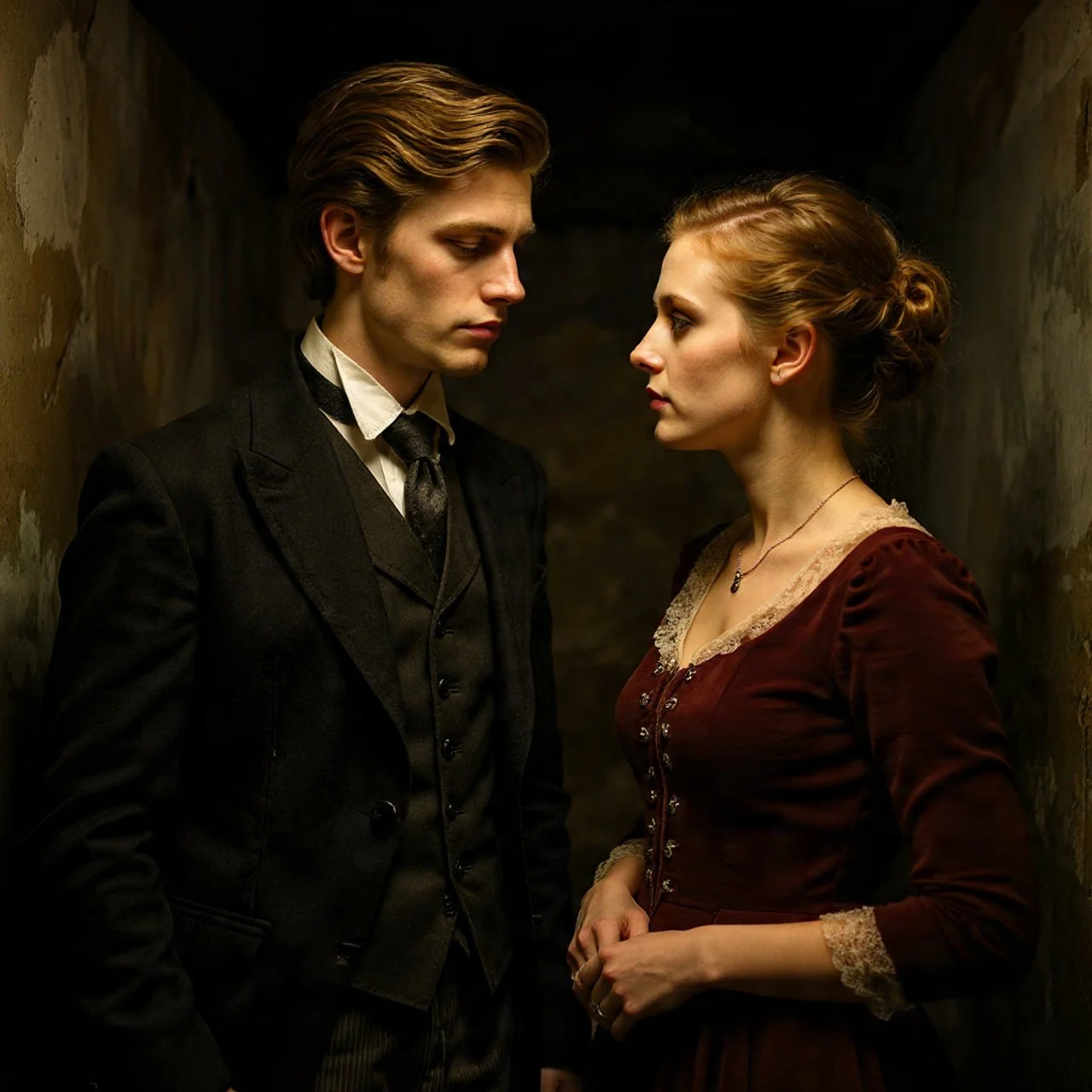
One last time!
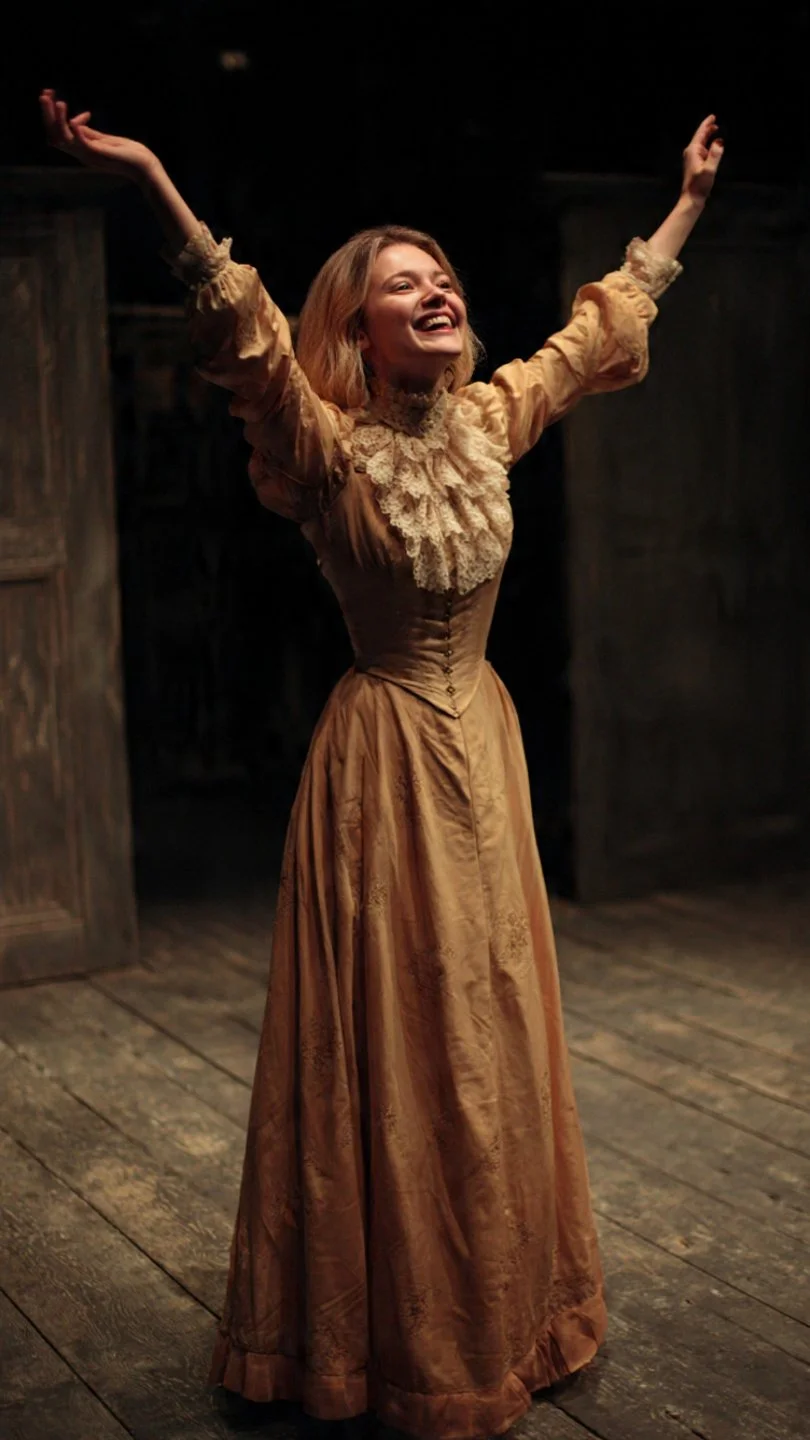
The last performance.