The Agony of the Will to Live.
In the depths of my soul, a maelstrom rages, a tempest of conflicting desires that does beset my every waking moment. The will to live, that primal instinct that drives all mortal men, has become a curse, a burden that I dare not shake. For in my case, the pursuit of pleasure and the avoidance of pain have become an all-consuming passion, a Hydra-like creature that grows stronger with each fleeting indulgence.
My life, a canvas of vibrant hues and dark shadows, has been reduced to a mere facade, a gilded cage that imprisons my very essence. The portrait hangs in my attic, a reflection of my soul, bears the weight of my transgressions, a constant reminder of the hideous price I pay for eternal youth and beauty. It came with no instructions.
And yet, I am drawn to the abyss, moth-like, help-less, to resist the siren's call of pleasure and excess. The agonies of conscience, the pangs of remorse, these do assail me, but I dare not heed their warning. For to yield to such sentiments would be to surrender to the void, to succumb to the nothingness that threatens to consume me whole.
Thus, I continue my downward spiral, a ship without anchor or rudder, tossed about by the tempests of my own desires. The will to live, that most fundamental of human instincts, has become a cruel mockery, a jest that torments me with its very futility. For what is life, when lived in the shadow of one's own portrait, a constant reminder of the corruption that lies within?
In this, my darkest hour, I am forced to confront the abyss that stares back at me from the mirror. And I find myself lost, a wanderer in a desolate landscape, searching for a way out of this labyrinth of my own creation. The agony of the will to live is a burden that I fear I shall bear until the end of my days, a constant reminder of the horrors that I have unleashed upon the world, and the terrible price that I must pay for my Faustian bargain.
As I stand before the mirror, as the painting behind me, the reflection that gazes back at me is a masterful deception, a facade of youthful beauty and unblemished innocence. Yet, in the depths of my soul, a maelstrom rages on, a tempest of conflicting desires that threatens to consume me whole. The portrait, the grotesque parody of my former self, serves as a constant reminder that each wrinkle, each blemish, each subtle corruption that creeps across its surface is a testament to the hideous bargain I have made.
The memories of those I have hurt, those I have loved, and those I have destroyed haunt me still. Sibyl Vane, with her tender voice and fragile heart, her tragic fate is a constant reminder of my own callousness. Alan Campbell, with his quiet dignity and steadfast loyalty, his ultimate sacrifice a testament to the darkness that I have unleashed upon the world. These ghosts, they whisper to me in the dead of night, their whispers a maddening litany of all that I have lost, all that I have become. And in their voices, I hear the echo of my own damnation, a reminder that some crimes can never be forgiven, some wounds can never be healed.
Alas, the wretched denizens of the East End, their lives a veritable abyss of despair, beset on all sides by the twin specters of poverty and crime. The yoke of bondage, imposed upon them by the merciless elites and the monarchical regime, does weigh heavily upon their shoulders, crushing their spirits and reducing their existence to a mere struggle for survival. I have beheld the very depths of human depravity, the most wretched and forsaken of souls, still clinging to life with a tenacity that does defy comprehension. Theirs is a state of unrelenting misery, a living hell on earth, wherein the very fabric of their being is rent asunder by the cruel hand of fate.
Were I to find myself in such a predicament, I daresay I would cry out to the infernal powers, to Lord Hades himself, to grant me release from this mortal coil, to take me home to the great beyond, that I might find solace in the darkness of eternal rest. For to live in such a state, to be reduced to such a level of degradation and despair, would be a fate worse than death itself. And yet, these wretched souls persevere, their spirits unbroken, their will to survive a testament to the indomitable human spirit. Mayhap, one day, their cries for justice and equality shall be heard, and the system that oppresses them shall be cast down, that they may rise from the ashes, like the phoenix of old, to claim their rightful place in this world.
I find myself pondering the fragility of the human spirit, as exemplified by the tragic cases of Allan Campbell and Sibyl Vane. Did they not possess the fortitude to persevere in the face of adversity, or did they simply succumb to the darkness that beset them? It is a curious thing, indeed, that the act of taking one's own life requires a certain degree of courage, or perhaps, a profound sense of desperation.
And yet, I, myself, have known moments of unmitigated despair, when the weight of my own guilt and shame threatened to consume me whole. The will to live, however, has proven itself to be a potent force, one that had sustained me, despite my many flaws and weaknesses. It would seem, therefore, that my desire to cling to life, no matter how tenuous its grasp, surpasses my longing for release.
But can it truly be said that those who take their own lives are weak, or do they simply possess a different kind of strength, one that allows them to confront the abyss head-on? I find myself torn between empathy for those who have chosen this path, and a deep-seated fear of the unknown that lies beyond the veil of mortality.
It is a truism, is it not, that those of great wealth and privilege should possess a more ardent attachment to this mortal coil? For what is there to desire when one has every luxury and comfort at their fingertips? The poorest wretches, on the other hand, eking out a miserable existence, beset on all sides by hardship and woe, might reasonably be expected to surrender their hold on life's thread. And yet, paradoxically, it is often the elite who, when beset by troubles of their own making; debts incurred through profligacy, or the displeasure of the crown, find life's burden too great to bear. Meanwhile, the impoverished masses toil on, their spirits unbroken, their will to survive a testament to the indomitable human spirit.
Thus, one might conclude that the burdens of poverty are a potent antidote to the romantic notion that life is precious. For those who have nothing, what is there to cherish? And yet, I, Dorian Gray, having obtained all that one could possibly desire; wealth, beauty, youth, and eternal life, without lifting a finger to earn it, find myself in possession of a unique perspective on this matter. Do I, in truth, value this existence, or am I merely clinging to it out of habit, or fear of the unknown?
I think of the poor, the wretched, the downtrodden, and I am struck by the cruel irony of it all. They, who have so little, cling to life with a ferocity that I can hardly comprehend. While I, who have everything, find myself wearied by the very abundance that was supposed to bring me joy.
In the annals of royal history, a most tragic event befell the esteemed House of Saxe-Coburg and Gotha, a dynasty intertwined with the very fabric of European nobility. Prince Alfred, the only son of Prince Alfred, Duke of Saxe-Coburg and Gotha, and a grandson of the venerable Queen Victoria, met a tragic demise in January 1899; subsequent to an attempt upon his own life. The circumstances surrounding his untimely death were shrouded in controversy, with whispers of a fatal revolver wound, self-inflicted in a moment of despair.
The particulars surrounding his passing were not publicly disclosed at the time, and various accounts have emerged. Certain sources intimate that he was beset by the ravages of syphilis, as well as potential maladies of the mind or a tumor affecting his brain. It is reported that his life came to a tragic end during a gathering of his family. Following this event, his mother, the Duchess of Saxe-Coburg and Gotha, is said to have arranged for his removal to a sanatorium, notwithstanding the reservations expressed by medical professionals.
This decision, it is alleged, was motivated by a desire to avert public scandal. The prince ultimately succumbed to his injuries several days later, within the confines of the institution. Thus, the curtain was drawn on the life of a young man whose fate was shaped by circumstances both tragic and unfortunate. May his story serve as a poignant reminder of the fragility of human existence and the devastating consequences of despair.
As I, Dorian Gray, ponder the vicissitudes of fate, I am struck by the cruel hand that dealt Prince Alfred out of this mortal coil. His absence from his parents' 25th wedding anniversary celebrations seemed like a portent of the darkness that was to come. The official account of his passing spoke of a breakdown, an illness that claimed his life, but those who knew the truth whispered of a different tale altogether. The weight of royal duty, the suffocating expectations, and the crushing burden of lineage can prove too great for some to bear. Was it the pressure of his station that drove Prince Alfred to such desperate measures, or was it the darkness that lurks within the human heart, waiting to pounce? Whatever the reason, his tragic fate serves as a poignant reminder of the fragility of life and the enduring power of sorrow.
The untimely passing of Crown Prince Rudolf of Austria, heir apparent to the venerable Austro-Hungarian throne, stands as a singularly notable case, shrouded in scandal and intrigue, amongst the annals of European nobility at the dawn of the 20th century's precursor. The year 1889, a most calamitous one for the royal family, witnessed the prince's tragic demise, which would go on to spark a maelstrom of controversy and morbid fascination amongst the populace.
At the Mayerling hunting lodge, a most secluded and picturesque retreat, the lifeless bodies of Crown Prince Rudolf and his youthful paramour, the 17-year-old Baroness Mary Vetsera, were discovered, precipitating a maelstrom of shock and awe throughout the empire. This was a tragic Love Affair Cut Short. The circumstances surrounding their deaths were redolent of a most unfortunate and calamitous pact, wherein the prince and his mistress had opted for a tragic conclusion to their ill-starred love affair.
In the aftermath of this tragic event, the Austro-Hungarian court, beset by the imperative of preserving the dignity and reputation of the imperial family, endeavored to cloak the circumstances of the prince's demise in a veil of secrecy. A Royal Cover-up of Unparalleled Proportions. Initially, the official narrative proffered to the public posited that the prince had succumbed to a heart attack, a more seemly and decorous explanation, calculated to avoid the taint of scandal and ignominy. For decades, the full and unvarnished truth regarding the events at Mayerling remained a closely guarded state secret, known only to a select coterie of the initiated.
The tragic suicides of personages such as Crown Prince Rudolf and other individuals of note, like Barcroft Boake in 1892, hold a certain morbid fascination for the public. Several factors contribute to the singular notability of these cases. Public Scandal and Fascination; Controlling the Narrative, and Professional Pressure. In cases such as Crown Prince Rudolf's, the authorities, fearful of the so-called "Werther effect," wherein extensive newspaper coverage might precipitate a spate of copycat suicides, endeavored to control the narrative, utilizing censorship and the paper’s manipulation to downplay the more lurid details of the tragedy. Even amongst the elite, certain professions, such as medical practitioners, were seen to be beset by singular pressures and stresses, contributing to an elevated risk of suicide. The rigors and demands of these professions, coupled with the intense competition and scrutiny, oftentimes proved a potent catalyst for the darker impulses of the human psyche.
In the shadows of my own existence, I find a morbid kinship with Prince Alfred and Prince Rudolf’s fate. The portrait, a symbol of my own corruption and decay, seems to mock me with its secrets. But I shall not follow in Prince Alfred's footsteps, no, I shall continue to dance with the devil, to tempt fate, and to savor every moment of my cursed existence. I am trapped in this existence, bound by the chains of my own desires. The portrait is a symbol of my corruption, my decay, my very soul. But what is a soul, really, but a mere abstraction, a convenient fiction? I have lost mine, if I ever had one, in the depths of my own vanity and selfishness. And yet, I continue on, driven by my desires, my whims, my capricious nature.
I am a monster, a creature of the damned, and I know it. But what is a monster, really, but a creature that has been shaped by its own desires, its own will. I am Dorian Gray, the master of my own destiny, the captain of my own soul. Or so I tell myself.
Verily, I possess an indomitable resolve to cling to this mortal coil, and live I shall, with unyielding fervor and unrelenting passion. For despite the tempests that beset me, despite the trials and tribulations that threaten to consume my very being, I find within myself a spark of life, a vital force that refuses to be extinguished.
My will to live is a flame that burns brightly, a beacon of hope in the darkness, guiding me through the most treacherous of times. It is a testament to the strength of my spirit, a spirit that has been tempered by adversity, and forged in the fire of experience.
And so, I shall continue to live, to breathe, to feel the warmth of the sun upon my skin, and the gentle touch of a summer's breeze. I shall drink deeply from the cup of life, savoring every moment, every sensation, every fleeting pleasure. For I am alive, and as long as I draw breath, I shall not let the forces of despair and despondency claim me.
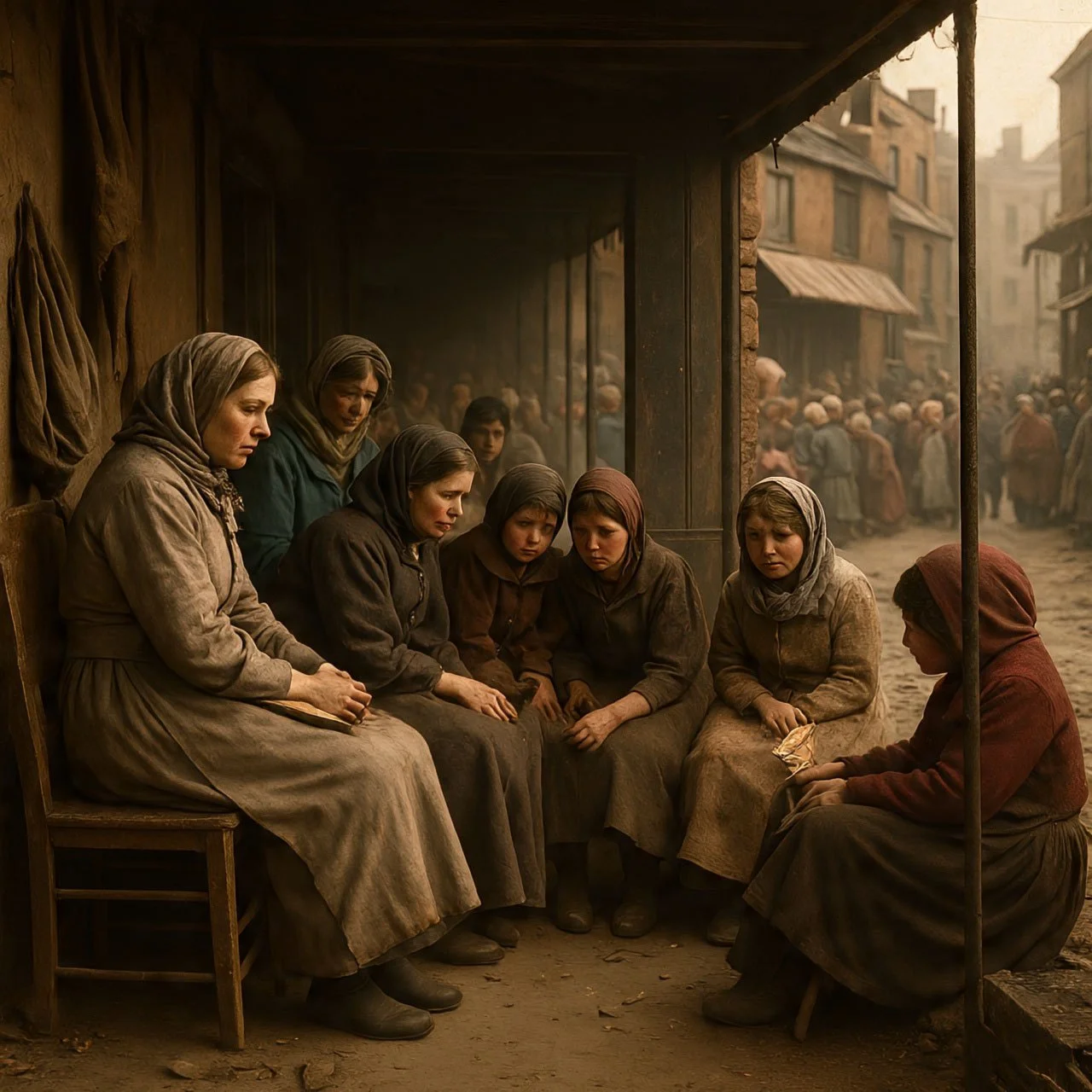
The poor of East End London.
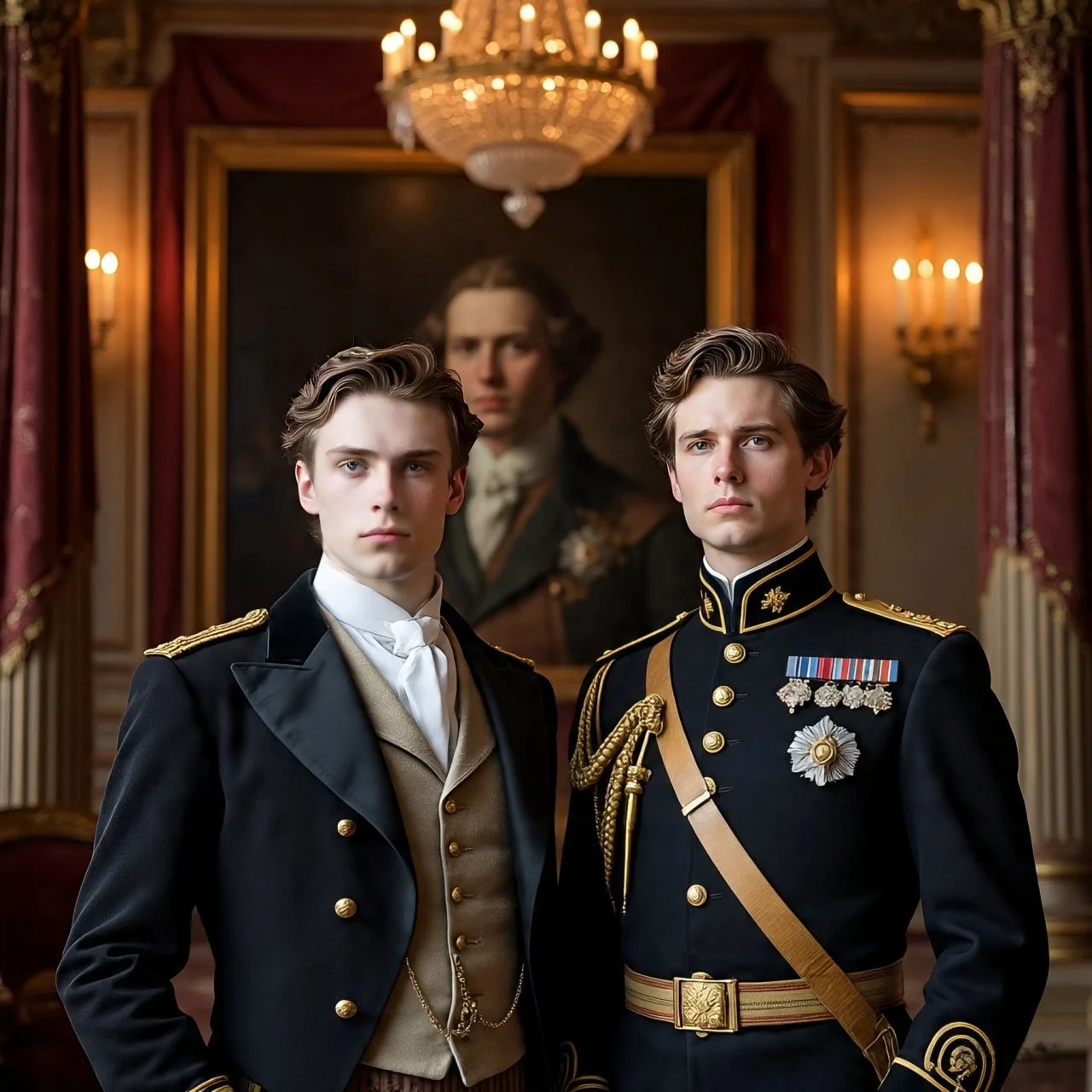
Dorian Gray and Prince Alfred.